Physically Based Rendering (PBR) has become the gold standard for creating realistic and consistent materials across various lighting conditions in game development. As technology evolves, so do the tools that empower artists to craft stunning, production-ready textures. Staying ahead means understanding which software offers the most robust features, efficient workflows, and future-proof capabilities.
In this article, we'll explore the five best PBR mapping tools that are set to define game development workflows in 2026. From industry staples to innovative new platforms, we'll break down what makes each tool essential for creating high-fidelity assets that truly shine.
Understanding PBR Fundamentals
Before diving into specific tools, it's crucial to grasp the core principles of PBR. Unlike older rendering techniques, PBR aims to simulate how light interacts with surfaces in the real world, resulting in more predictable and physically accurate visuals. This consistency is vital for achieving a cohesive look across all assets in a game.
Key PBR maps typically include:
- Albedo (Base Color): Defines the color of the surface without any lighting information.
- Normal: Adds surface detail without increasing polygon count, simulating bumps and grooves.
- Roughness: Controls how diffuse or sharp reflections are, indicating surface smoothness.
- Metallic: Distinguishes between metallic and non-metallic surfaces, influencing reflection properties.
- Ambient Occlusion (AO): Simulates soft shadows where objects are occluded, adding depth.
Effective PBR mapping relies on precise control over these channels, ensuring materials react realistically to light in any game engine.
The Criteria for Our Selection
Our selection of the top PBR mapping tools for 2026 is based on several critical factors that impact modern game development:
- Industry Adoption & Integration: How widely used is the tool, and how well does it integrate with existing pipelines and game engines?
- Feature Set & Innovation: Does it offer comprehensive features for various PBR tasks, and does it push boundaries with new technologies like AI or advanced proceduralism?
- Workflow Efficiency: How quickly and intuitively can artists achieve high-quality results?
- Community & Support: Is there a strong community, ample learning resources, and reliable developer support?
- Future-Proofing: Does the tool show potential for continued development and relevance in the coming years?
With these criteria in mind, let's explore the leading contenders.
1. Adobe Substance 3D Painter: The Industry Standard for Texture Painting

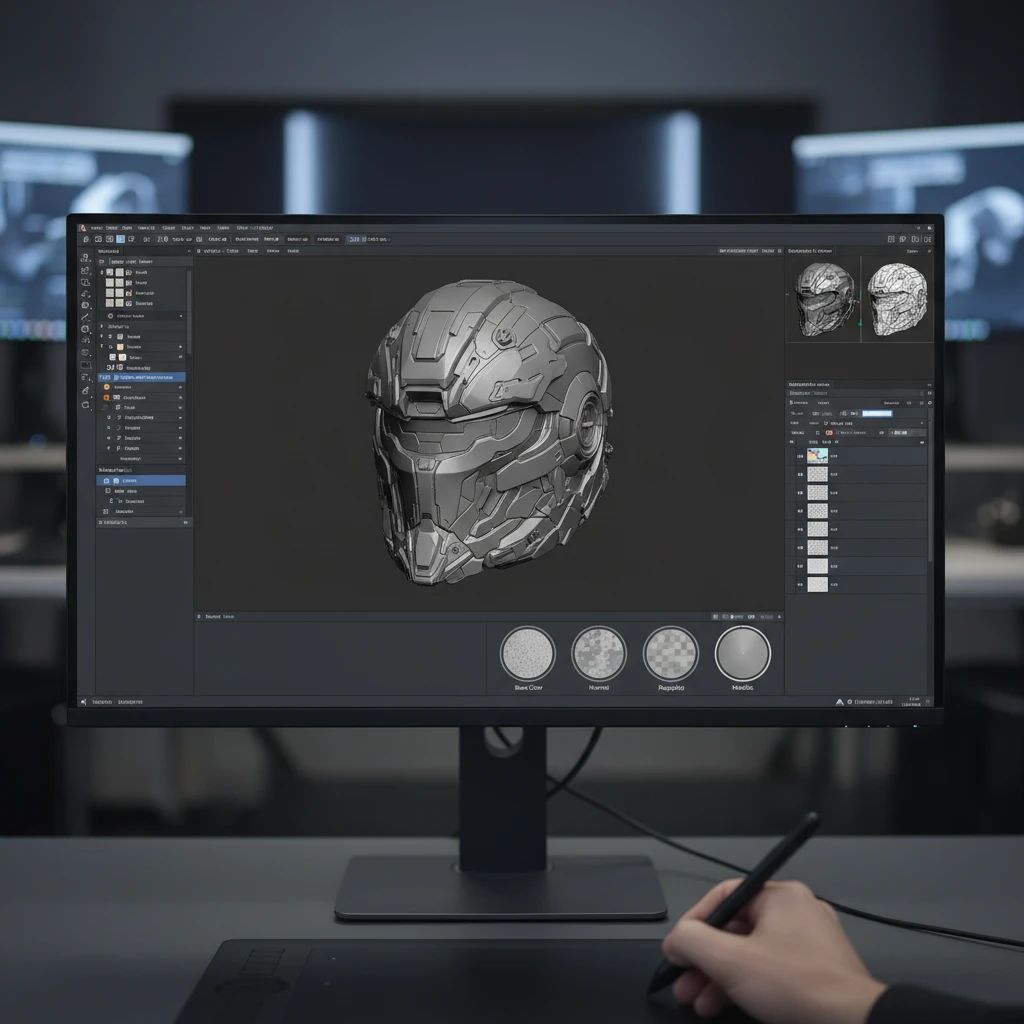
Adobe Substance 3D Painter remains an undisputed leader for 3D texture painting. Its intuitive layer-based workflow, smart materials, and extensive brush library make it a powerhouse for creating detailed PBR textures directly on 3D models. Artists can paint across multiple PBR channels simultaneously, seeing real-time feedback in an advanced viewport.
Painter's strength lies in its ability to quickly generate complex wear, dirt, and material variations through procedural masks and generators. It seamlessly integrates with other Substance tools and exports optimized textures for all major game engines. For artists who prioritize direct painting and iterative design, Painter is indispensable.
Key Strengths:
- Real-time PBR viewport and painting.
- Smart materials and generators for rapid iteration.
- Non-destructive workflow with layers and masks.
- Excellent integration with game engines and other 3D software.
2. Adobe Substance 3D Designer: Procedural Material Powerhouse
Where Painter excels in direct application, Adobe Substance 3D Designer dominates in procedural material authoring. This node-based software allows artists to create PBR materials from scratch using a vast library of nodes, mathematical functions, and image inputs. The outputs are infinitely resolution-independent and highly customizable.
Designer is the go-to for creating tileable textures, complex patterns, and material variations that can be tweaked and reused across entire projects. Its graph-based approach enables artists to build intricate material logic, making it ideal for technical artists and those needing ultimate control and flexibility over their PBR assets. The ability to publish Substance graphs for use in other applications, including Painter, further solidifies its value.
Key Strengths:
- Unparalleled procedural texture generation.
- Node-based workflow for maximum control and reusability.
- Resolution-independent outputs.
- Ideal for creating complex, customizable material libraries.
3. Quixel Mixer: Photogrammetry-Powered PBR Texturing
Quixel Mixer offers a compelling alternative, especially for artists leveraging photogrammetry or seeking a powerful, free solution. Mixer excels at blending and layering scanned assets from the extensive Megascans library to create highly realistic PBR materials. Its layer-based system is intuitive, allowing for quick material blending, painting, and procedural adjustments.
What sets Mixer apart is its deep integration with the Megascans ecosystem, providing access to a vast library of high-quality PBR assets. This makes it incredibly efficient for environment artists who need to quickly prototype and iterate on realistic surfaces. While not as feature-rich as Substance Painter for direct 3D painting, its focus on material blending and smart layering makes it a strong contender for specific PBR workflows.
Key Strengths:
- Deep integration with Quixel Megascans library.
- Intuitive layer-based material blending.
- Strong for photogrammetry-based workflows.
- Free to use with an Epic Games account.
4. Blender: Versatile 3D Suite with Growing PBR Capabilities
Blender, the open-source 3D creation suite, has rapidly evolved into a formidable tool for PBR mapping. With its Cycles and Eevee renderers, robust shader editor (node-based), and a vibrant community developing powerful add-ons, Blender offers a comprehensive environment for PBR material creation, application, and rendering.
Artists can model, sculpt, unwrap, and texture PBR assets all within Blender. The Principled BSDF shader node, based on Disney's PBR model, provides a straightforward way to create physically accurate materials. While it may require more setup for advanced texturing compared to dedicated tools, its all-in-one nature and cost-effectiveness make it an excellent choice for indie developers and studios looking for an integrated solution. Community add-ons further extend its capabilities for baking, procedural texturing, and more.
Key Strengths:
- All-in-one 3D creation suite (modeling, sculpting, texturing, rendering).
- Powerful node-based shader editor.
- Free and open-source with a strong community.
- Excellent for integrated PBR workflows from start to finish.
5. PLAYTEX: Deterministic & AI-Driven PBR Map Generation

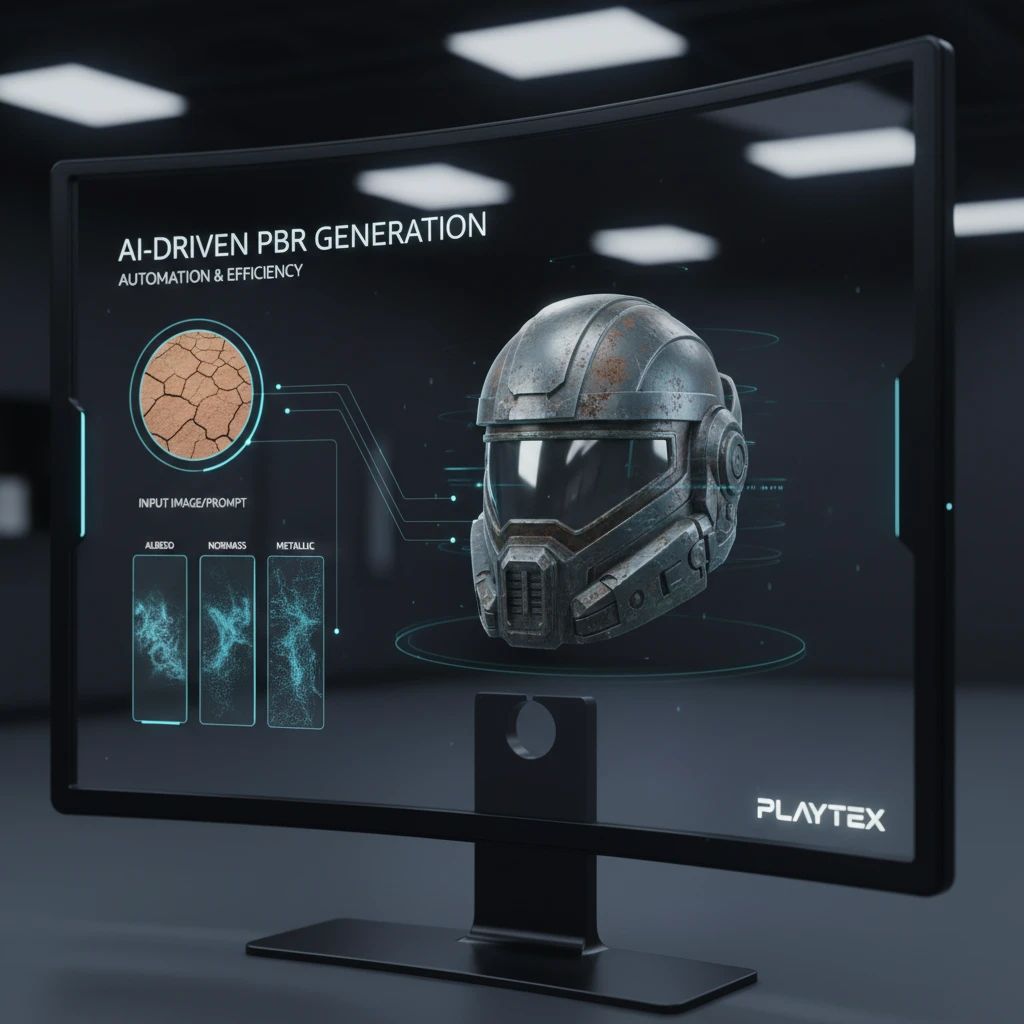
Stepping into the future of PBR mapping, PLAYTEX offers a specialized and highly efficient approach to generating PBR maps. Unlike traditional painting or procedural tools, PLAYTEX focuses on deterministic and AI-driven texture generation, streamlining the creation of engine-ready materials. This platform is designed for creators who need repeatable workflows and fast iteration without sacrificing quality.
PLAYTEX excels in scenarios where artists need to quickly generate a full suite of PBR maps from a single input image or even a text prompt. Its deterministic PBR map generation ensures consistent, high-quality outputs every time, making it invaluable for maintaining visual fidelity across large projects. Furthermore, its AI texture generation capabilities allow for rapid prototyping and content creation, transforming simple inputs into complex, realistic materials. This makes PLAYTEX a powerful complementary tool, or even a primary solution for specific PBR map generation tasks, especially for teams focused on speed and consistency.
Key Strengths:
- Deterministic PBR map generation for consistent outputs.
- AI-driven texture generation for rapid prototyping.
- Image-to-texture workflows for converting real-world assets.
- Focus on production-ready, engine-optimized materials.
- Streamlined for team collaboration and content pipelines.
Integrating PBR Tools into Your Workflow
The true power of these tools often comes from how effectively you integrate them into your overall game development pipeline. Many studios utilize a combination of these applications:
- Concept & Blockout: Blender for initial modeling.
- High-Poly Sculpting: ZBrush or Blender for detail.
- Retopology & UVs: Blender or Maya.
- PBR Texturing: Substance Painter for direct painting, Substance Designer for procedural materials, Quixel Mixer for scanned asset blending, and PLAYTEX for rapid map generation or AI-driven textures.
- Material Assembly & Optimization: Game engine material editors, often with outputs from PLAYTEX's engine-ready materials.
Tools like PLAYTEX, with their emphasis on image-to-texture workflows and asset binding, can act as a central hub for converting various inputs into consistent PBR outputs, feeding directly into your engine or other texturing software.
The Future of PBR Mapping
Looking ahead, PBR mapping will continue to evolve with advancements in AI and real-time technologies. We can expect even more sophisticated AI-driven texture generation, allowing artists to create complex materials with minimal input. Proceduralism will become even more powerful, enabling dynamic and adaptive materials that react to in-game events.
Tools that prioritize efficiency, consistency, and intelligent automation, like PLAYTEX, are poised to lead this charge, empowering creators to focus more on artistic vision and less on repetitive technical tasks.
Conclusion
The landscape of PBR mapping tools in 2026 offers incredible power and flexibility for game developers. Whether you rely on the robust painting capabilities of Substance Painter, the procedural depth of Substance Designer, the photogrammetry integration of Quixel Mixer, the all-in-one versatility of Blender, or the cutting-edge AI and deterministic generation of PLAYTEX, each tool brings unique strengths to the table.
By understanding their individual merits and how they can integrate into a cohesive workflow, artists and studios can create visually stunning, physically accurate, and production-ready assets that push the boundaries of realism in games. For those seeking to accelerate their PBR material creation with intelligent automation and consistent outputs, PLAYTEX offers a compelling vision for the future.