In game development, visual consistency is paramount. Physically Based Rendering (PBR) has revolutionized how we create realistic materials, but achieving consistent PBR texture outputs across a large asset library or a diverse team remains a significant challenge. Discrepancies in material properties can break immersion, increase iteration times, and ultimately impact game quality.
This article explores the complexities of maintaining PBR consistency and demonstrates how PLAYTEX provides a robust, predictable approach to texture generation, ensuring your game assets always look their best, regardless of scale or artistic variation.
The PBR Consistency Challenge in Game Development
PBR relies on physically accurate material properties to render surfaces realistically. However, the process of creating and integrating PBR textures often introduces variables that lead to inconsistencies. Different artists may interpret specifications differently, use varied tools with unique calibration, or simply introduce subtle variations in their workflow.
These variations can manifest as mismatched reflectivity, incorrect roughness, or inconsistent normal map details between assets that should appear similar. The result is a fragmented visual experience, increased quality assurance overhead, and frustrating rework cycles for development teams striving for a cohesive aesthetic.
Deterministic Workflows: The Foundation of Predictable PBR
At the core of PLAYTEX's solution is a commitment to deterministic workflows. This means that given the same input, you will always receive the same, predictable output. For PBR texture generation, this is critical for maintaining consistency across an entire project.
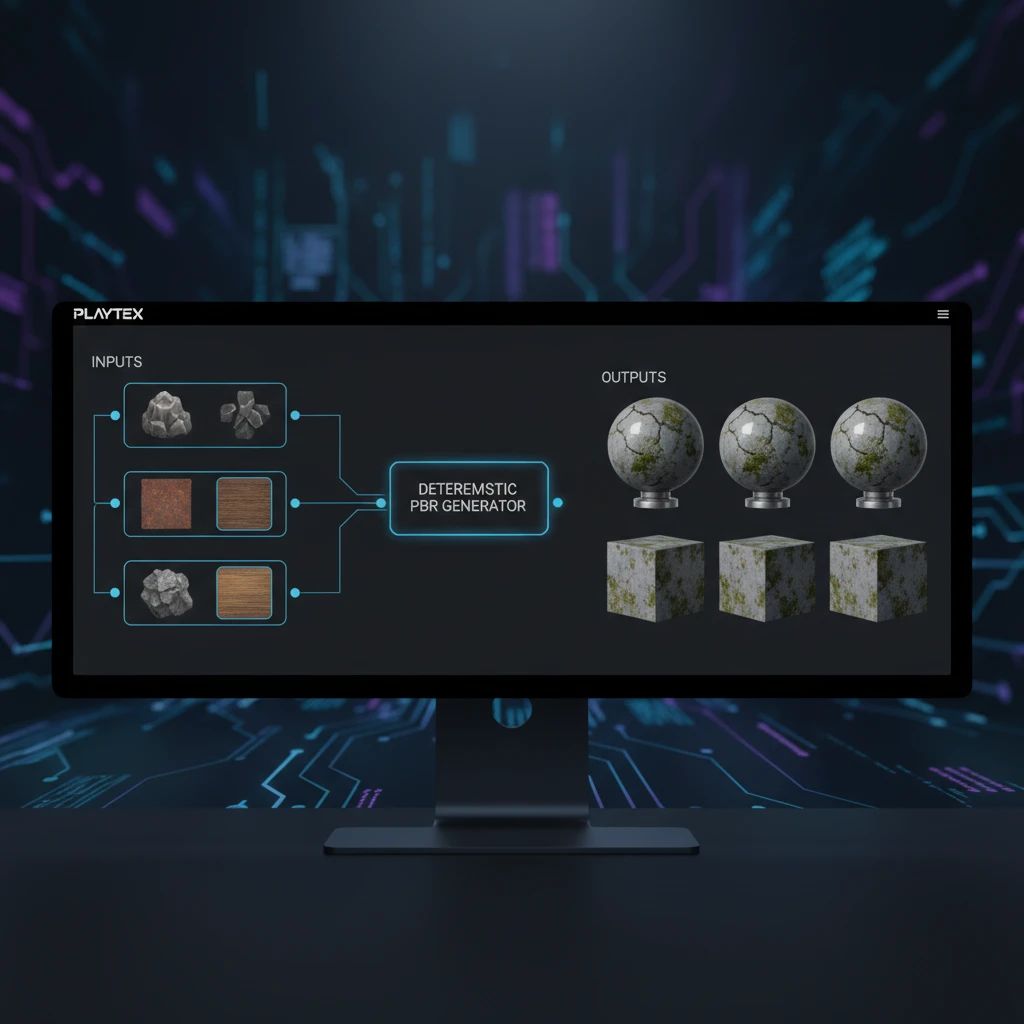
PLAYTEX standardizes the texture creation pipeline, from initial input to final output. Our PBR map generator ensures that base color, normal, roughness, metallic, and ambient occlusion maps are generated with precise, repeatable algorithms. This eliminates the guesswork and subjective variations inherent in manual processes, providing a reliable foundation for all your materials.
Leveraging AI for Enhanced Texture Consistency
While deterministic processes provide a strong baseline, AI integration elevates consistency further. PLAYTEX harnesses advanced AI to understand and maintain artistic style, resolution, and material properties across a vast array of textures. This is particularly valuable when generating variations or expanding existing material libraries.
Our AI texture generation capabilities can intelligently adapt to specific art directions, ensuring that new textures seamlessly blend with existing assets. This reduces the risk of visual outliers and empowers artists to scale content creation without sacrificing the cohesive look and feel of their game world. The AI learns from your established standards, propagating them consistently.
Streamlined Asset Binding and Material Management
Generating consistent textures is only half the battle; ensuring they are correctly applied and managed within your game engine is equally important. PLAYTEX offers robust features for asset binding and material management, designed to prevent integration errors and maintain fidelity.
The platform simplifies the process of associating generated textures with 3D models and configuring materials for various game engines. This includes automated naming conventions, resolution scaling, and format conversions, all contributing to a seamless and error-free pipeline. By centralizing material definitions and their application, PLAYTEX helps teams avoid common pitfalls like incorrect texture assignments or mismatched material parameters.
Collaborative Consistency: Empowering Teams
Game development is a team sport, and consistency must extend across all contributors. PLAYTEX is built with collaboration in mind, providing tools that enable teams to work together efficiently while adhering to shared PBR standards. Centralized asset libraries, version control, and shared project settings ensure that every team member is working from the same source of truth.

This collaborative environment minimizes divergence in artistic output and technical implementation. Artists can share and iterate on materials with confidence, knowing that the underlying PBR properties will remain consistent. Technical artists can establish global parameters that propagate across all assets, enforcing a unified visual language throughout the project.
Real-World Impact: Faster Iteration, Higher Quality
The practical benefits of predictable PBR textures are significant. Development teams can achieve faster iteration cycles because less time is spent correcting visual discrepancies. Artists can focus on creative expression rather than troubleshooting material issues. Quality assurance becomes more efficient, as visual bugs related to inconsistent textures are drastically reduced.
Ultimately, PLAYTEX empowers studios to deliver higher-quality games with a more cohesive and immersive visual experience. By automating and standardizing the PBR texture pipeline, it frees up valuable development resources, allowing teams to innovate and refine their gameplay.
Conclusion: Building a Predictable Future for Game Art
Achieving predictable PBR texture outputs is no longer an aspirational goal but a tangible reality with PLAYTEX. By combining deterministic workflows, intelligent AI assistance, streamlined asset management, and robust collaborative features, PLAYTEX provides a comprehensive solution for game developers seeking unparalleled consistency and efficiency.
Embrace a future where your PBR materials are always on point, your workflows are optimized, and your game's visual fidelity is consistently exceptional. PLAYTEX is designed to be the bedrock of your production-ready content pipeline, ensuring every texture contributes to a unified, high-quality experience for your players.