The landscape of game development is constantly evolving, with artificial intelligence emerging as a transformative force. For environment and technical artists, AI texture generation offers unprecedented opportunities to accelerate workflows, enhance creative iteration, and achieve higher fidelity in game assets. No longer a futuristic concept, AI is now a practical tool for creating production-ready textures.
This article dives into practical workflows for integrating AI texture generation into your game art pipeline. We'll explore how these tools function, their tangible benefits, and best practices for leveraging them to produce high-quality, engine-ready materials efficiently.
The Evolution of Texture Creation in Game Development
Historically, texture creation was a labor-intensive process, relying on manual painting, photo sourcing, and intricate procedural generation. Each method presented its own set of challenges, from time commitment to maintaining artistic consistency across large projects. The demand for increasingly realistic and detailed game worlds pushed artists to seek more efficient solutions.
With the advent of AI, particularly deep learning models, texture generation has entered a new era. These models, trained on vast datasets of real-world materials and artistic styles, can now interpret complex inputs—from simple text prompts to reference images—and generate sophisticated PBR (Physically Based Rendering) texture sets. This shift empowers artists to focus more on creative direction and less on repetitive manual tasks.
Understanding AI Texture Generation Capabilities
At its core, AI texture generation utilizes machine learning algorithms to synthesize new visual data. Artists typically provide input in one of several forms:
- Text Prompts: Describing the desired material (e.g., "weathered concrete with moss," "ancient volcanic rock").
- Reference Images: Providing a photo or concept art for the AI to draw inspiration from, generating variations or PBR maps.
- Simple Sketches/Masks: Guiding the AI with basic shapes or color zones to define material distribution.
The output typically includes a full suite of PBR maps: Albedo (color), Normal, Roughness, Metallic, Ambient Occlusion, and sometimes Height or Displacement maps. The key advantage is the speed at which these comprehensive material sets can be produced, allowing for rapid prototyping and iteration.
Streamlining Your Workflow with AI Tools
Integrating AI into your texture workflow can significantly boost productivity and creative output. Platforms like PLAYTEX are designed to make these advanced capabilities accessible and production-ready.
Rapid Prototyping and Iteration
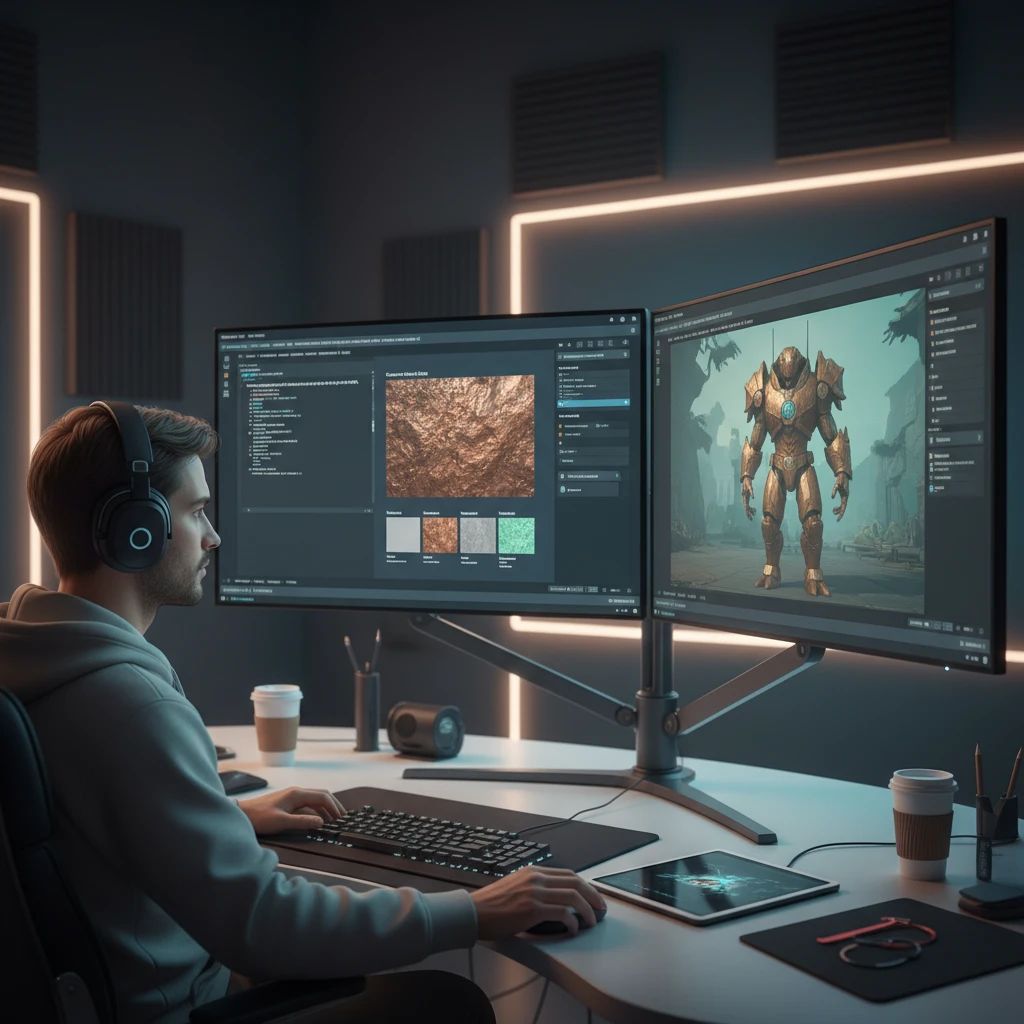
One of the most immediate benefits of AI texture generation is the ability to quickly generate multiple texture variations. Instead of spending hours crafting a single material, artists can experiment with different prompts or reference images to explore numerous aesthetic directions in minutes. This speed allows for more creative exploration and faster decision-making during the art direction phase.
Bridging Gaps with Image-to-Texture
Many projects start with concept art or real-world photographic references. AI tools can transform these inputs into usable game textures. With an image-to-texture workflow, a simple photograph can be converted into a complete PBR material, extracting normal, roughness, and other essential maps. This is invaluable for quickly bringing real-world fidelity or unique artistic styles into your game engine without manual map creation.
Enhancing PBR Workflows
AI excels at generating consistent and physically accurate PBR maps. Whether you're starting from scratch or refining existing assets, AI can help ensure that your materials behave realistically under various lighting conditions. For instance, you can use AI to generate a base material and then fine-tune specific PBR values. PLAYTEX offers both AI-powered and deterministic PBR map generation to give artists complete control and flexibility.
Integrating AI-Generated Assets into Game Engines
Once you've generated your textures, integrating them into your game engine (e.g., Unreal Engine, Unity) is a critical next step. AI tools typically export textures in standard formats like PNG, TGA, or EXR, ensuring broad compatibility. The focus then shifts to proper material setup within the engine.
Ensure that each PBR map is assigned to its correct channel (Albedo to Base Color, Normal to Normal, etc.) and that color spaces are correctly handled (e.g., sRGB for Albedo, Linear for Normal and other data maps). Optimization is also key: consider appropriate resolutions, compression settings, and tiling methods to maintain performance without sacrificing visual quality. Clean, engine-ready outputs are a hallmark of a professional art pipeline.
Best Practices and Creative Control with AI
While AI is powerful, it's a tool that requires skillful guidance. Achieving optimal results involves understanding its strengths and limitations.
Prompt Engineering for Precision
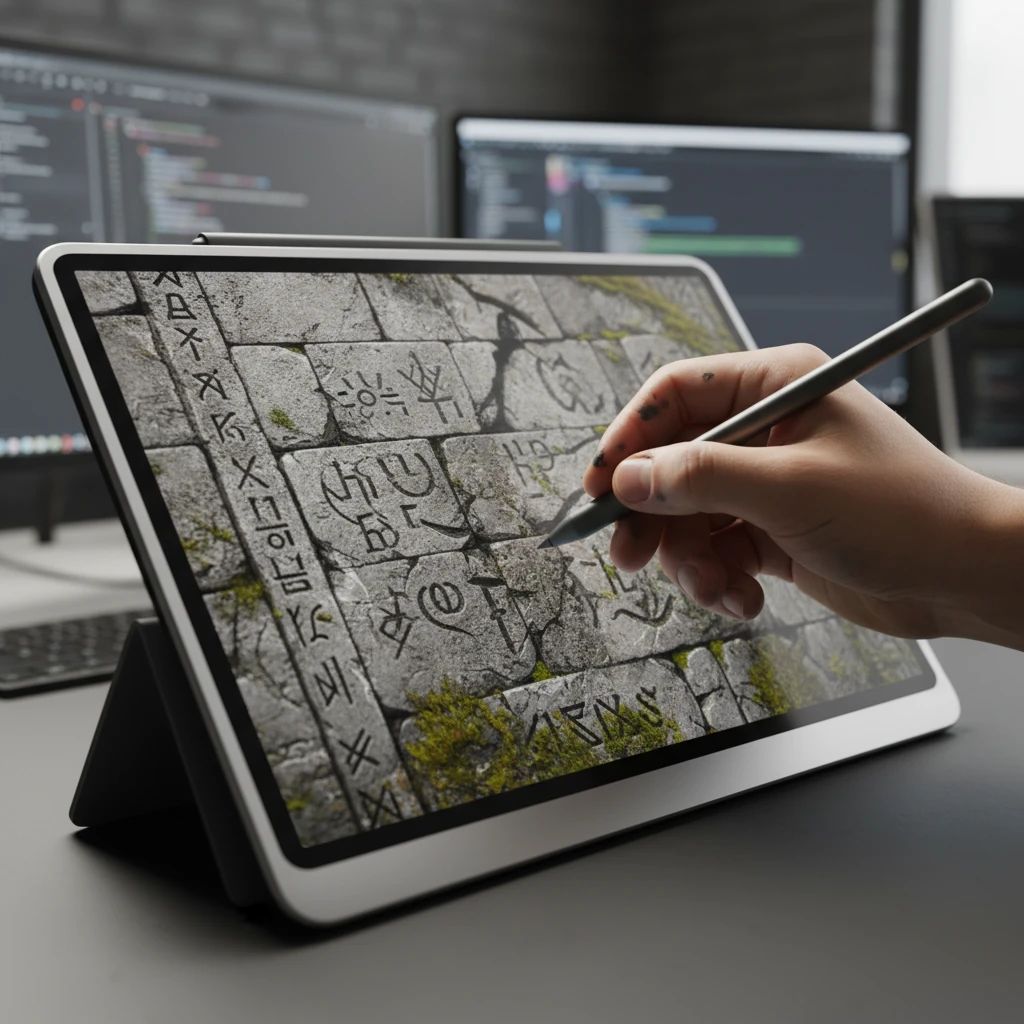
The quality of your AI output often correlates directly with the quality of your input. For text-to-texture generation, learning to craft precise and descriptive prompts is essential. Experiment with keywords, material properties, environmental context, and artistic styles to guide the AI towards your vision. Iteration is key; refine your prompts based on initial results.
Post-Generation Refinement
AI-generated textures are often excellent starting points, but rarely the final product. Artists should view AI as a powerful assistant. Tools like Substance Painter/Designer, Photoshop, or even your game engine's material editor are crucial for adding unique details, fixing imperfections, or blending multiple AI-generated elements. This human touch ensures the final asset aligns perfectly with your artistic vision.
Maintaining Artistic Vision
AI should augment, not replace, artistic creativity. It frees up time from mundane tasks, allowing artists to focus on higher-level design, storytelling through environments, and unique stylistic choices. Use AI to handle the heavy lifting of base material creation, then infuse your unique artistic flair during the refinement stage.
The Future Landscape of AI in Game Art
The capabilities of AI in game art are expanding rapidly. We can anticipate more sophisticated models capable of real-time texture generation, deeper integration into digital content creation (DCC) tools, and even the potential for dynamic, adaptive textures that respond to in-game events or player actions. Imagine environments that naturally weather over time or materials that change based on gameplay context.
Platforms like PLAYTEX are committed to evolving with these technologies, providing artists with cutting-edge tools that remain practical and production-focused. The goal is to continuously empower creators to build more immersive and visually stunning game worlds.
Conclusion
AI texture generation is no longer a novelty; it's a vital component of modern game art production. By embracing these tools, artists can significantly enhance their efficiency, accelerate iteration cycles, and unlock new creative possibilities. The practical workflows outlined here demonstrate that AI is ready to be integrated into your pipeline, offering a powerful assistant that complements your skills and helps you deliver high-quality, production-ready assets faster than ever before. Start exploring how AI can transform your texture creation process today.