Creating Seamless Textures with AI for Game Development
Discover how AI is transforming game texture creation, enabling developers to generate seamless, production-ready materials faster than ever before. Explore the PLAYTEX AI Texture Generator workflow.
Reviewed June 3, 2026
June 3, 2026ai texturesseamless texturesgame developmentpbr materials
Key Takeaways
PLAYTEX AI Texture Generator creates seamless texture concepts suitable for production-ready material workflows.
The platform supports deterministic PBR map generation (Normal, Roughness, Metallic, AO, Height, Emission) from source textures.
Tools like the Image Editor and Image to Texture Generator help prepare and convert source images into tileable textures.
PLAYTEX outputs engine-ready materials and facilitates repeatable workflows, accelerating game content pipelines.
AI texture generation significantly reduces manual effort, allowing artists to focus on creative iteration and collaboration.
Who Informed This
This article is based on the described capabilities and workflows of the PLAYTEX AI Texture Generator and related tools, as detailed in the provided internal site context and research brief. It outlines the product's features for creating seamless textures and PBR materials for game development.
How It Was Evaluated
The content is derived from the stated functionalities and intended use cases of the PLAYTEX platform. It describes how the tools are designed to operate within a game development pipeline.
Proof And Evidence
PLAYTEX offers an AI Texture Generator that generates seamless texture concepts. It supports deterministic PBR map generation (normal, roughness, metallic, AO, height, emission) from source textures. The platform includes an Image Editor for source preparation and an Image to Texture Generator for converting photos into tileable textures, all contributing to engine-ready materials and repeatable workflows.
Limits And Caveats
This article focuses on the described features and workflow advantages of PLAYTEX. It does not include specific performance benchmarks, direct comparisons with competitor tools, or user experience data from external testing.
Creating immersive game environments relies heavily on high-quality, seamless textures. Traditionally, this process has been time-consuming, requiring meticulous manual effort to ensure tiling perfection. However, artificial intelligence is rapidly changing this landscape, offering powerful tools to accelerate and enhance texture creation.
This article explores how AI is transforming the workflow for game developers and artists, focusing on how tools like the PLAYTEX AI Texture Generator enable the efficient creation of seamless, production-ready materials for modern game pipelines.
Why Seamless Textures are Crucial for Game Environments
Seamless textures are fundamental to realistic and visually consistent game worlds. They allow artists to cover large surfaces without visible repetitions or seams, which would otherwise break immersion. From sprawling landscapes to intricate architectural details, the ability to tile textures flawlessly ensures a polished and professional look.
Without seamless tiling, environmental assets can appear artificial, drawing players out of the experience. Achieving this quality manually often involves careful photo manipulation, procedural generation, or painting, all of which demand significant artistic skill and time.
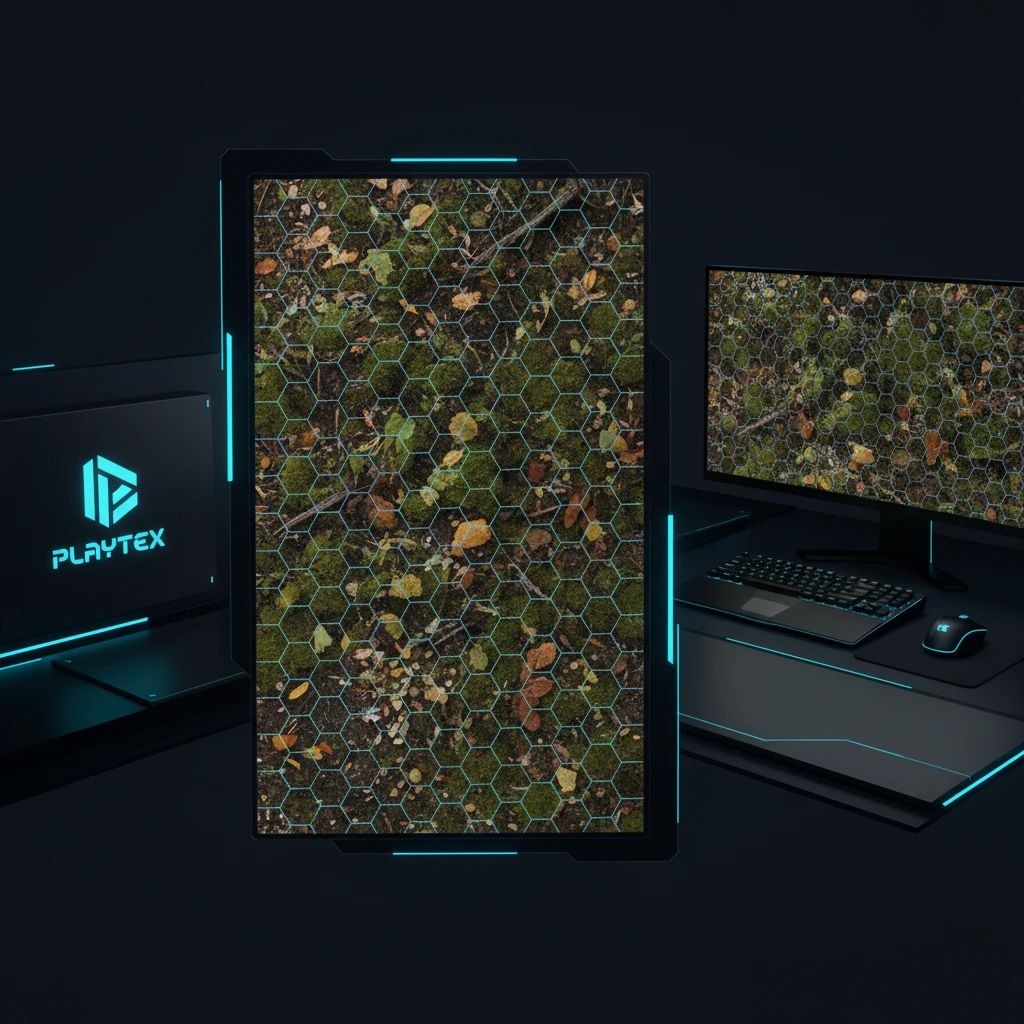
A seamless texture applied to a 3D terrain, demonstrating how proper tiling avoids visual repetition and maintains immersion.
The Role of AI in Modern Texture Generation
AI has emerged as a game-changer for content creation, and texture generation is no exception. Machine learning models can analyze vast datasets of textures to understand patterns, details, and material properties. This enables them to generate new textures or intelligently modify existing ones to achieve specific characteristics, including perfect tiling.
The primary advantage of AI in this context is speed and efficiency. What once took hours of manual work can now be achieved in minutes, freeing artists to focus on creative iteration and refinement rather than repetitive technical tasks. AI tools can also help bridge skill gaps, making high-quality texture creation more accessible.
Introducing the PLAYTEX AI Texture Generator: Seamless Concepts for Production
PLAYTEX offers a dedicated AI Texture Generator designed specifically for game development workflows. This tool focuses on generating seamless texture concepts that are immediately suitable for production-ready material pipelines. It's built to understand the demands of real-time rendering, ensuring outputs are optimized for performance and visual fidelity.
The generator provides a powerful starting point for any material, allowing artists to quickly explore variations and styles. By leveraging advanced AI, PLAYTEX reduces the iterative cycle of texture creation, providing a foundation that can be further refined with deterministic PBR map generation.
Step-by-Step Workflow: Generating Seamless Textures with PLAYTEX AI
The process of generating seamless textures with PLAYTEX AI is designed to be intuitive and efficient:
Define Your Concept: Start by providing a textual prompt or an initial reference image to guide the AI on the desired material, such as 'mossy forest ground' or 'worn concrete wall'.
Generate Initial Textures: The AI Texture Generator will produce several seamless texture concepts based on your input. These are designed to tile perfectly from the outset.
Review and Iterate: Evaluate the generated options. You can refine your prompt or adjust parameters to guide the AI towards a more specific aesthetic or detail level.
Select for PBR Workflow: Once you have a base texture that meets your artistic vision, you can proceed to generate the full suite of PBR maps.
This iterative approach ensures that the AI serves as a creative partner, allowing artists to maintain control while benefiting from accelerated generation.
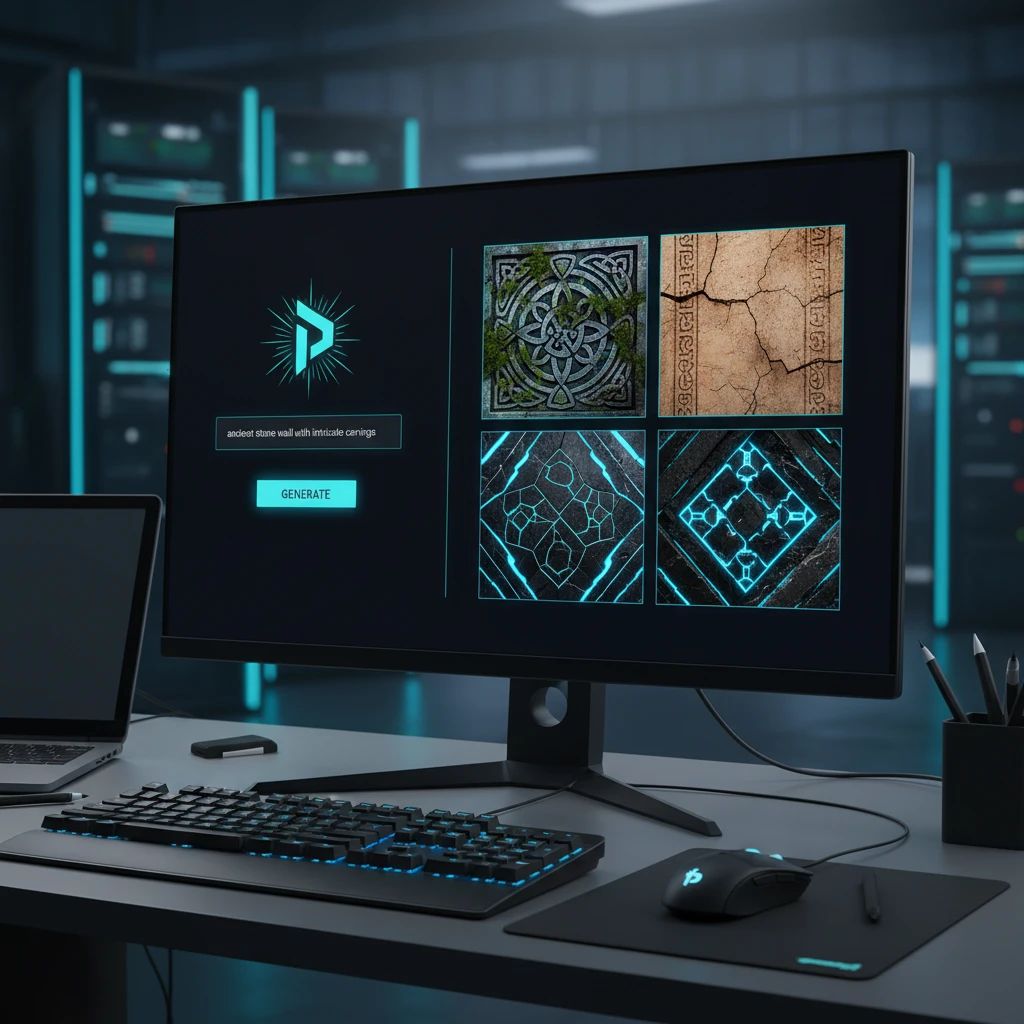
The PLAYTEX AI Texture Generator interface, illustrating the process of inputting a prompt and reviewing generated seamless texture concepts.
Integrating AI-Generated Textures into Your PBR Workflow
A seamless base texture is just the beginning. For modern game engines, a complete Physically Based Rendering (PBR) material requires multiple maps to define how light interacts with the surface. PLAYTEX supports deterministic PBR map generation, building essential maps from your source textures.
Deterministic PBR Map Generation
With PLAYTEX, you can generate the following critical PBR maps:
Normal Map: Adds surface detail without increasing polygon count.
Roughness Map: Controls the micro-surface detail, affecting how light scatters.
Metallic Map: Defines which parts of a surface are metallic.
Ambient Occlusion (AO) Map: Simulates soft shadows from indirect lighting.
Height Map: Provides depth information, often used for parallax occlusion mapping.
Emission Map: Specifies areas that emit light.
This comprehensive map generation ensures that your AI-created textures translate into full, engine-ready materials that adhere to industry standards like glTF, promoting interoperability across different tools and engines.
Preparing Your Source Inputs: Leveraging PLAYTEX Image Editor and Image to Texture Generator
While AI can generate textures from scratch, often you'll want to use existing photos or concept art as a starting point. PLAYTEX provides tools to optimize these inputs:
Image Editor: This tool allows you to clean up images, remove distractions, and make necessary adjustments before feeding them into the AI. A clean source image leads to better AI-generated results.
Image to Texture Generator: For converting photos and reference images into tileable textures, this generator is invaluable. It transforms non-seamless inputs into perfectly tiling textures, ready for downstream PBR work or as a base for further AI enhancement.
These tools ensure that even imperfect source material can be leveraged effectively within a production pipeline, maximizing the utility of your existing asset library.
Ensuring Engine-Ready Materials and Repeatable Workflows with PLAYTEX
The ultimate goal for any game developer is to produce assets that are ready for immediate integration into their chosen engine. PLAYTEX prioritizes outputs that are engine-ready, ensuring compatibility and optimal performance. This means textures and PBR maps are generated with the correct formats, resolutions, and properties required by modern game engines.
Furthermore, PLAYTEX facilitates repeatable workflows. Once you've established a successful generation process for a particular material, you can replicate it consistently. This is crucial for maintaining visual coherence across large projects and for collaborative teams, where multiple artists need to produce assets that match a defined style guide.
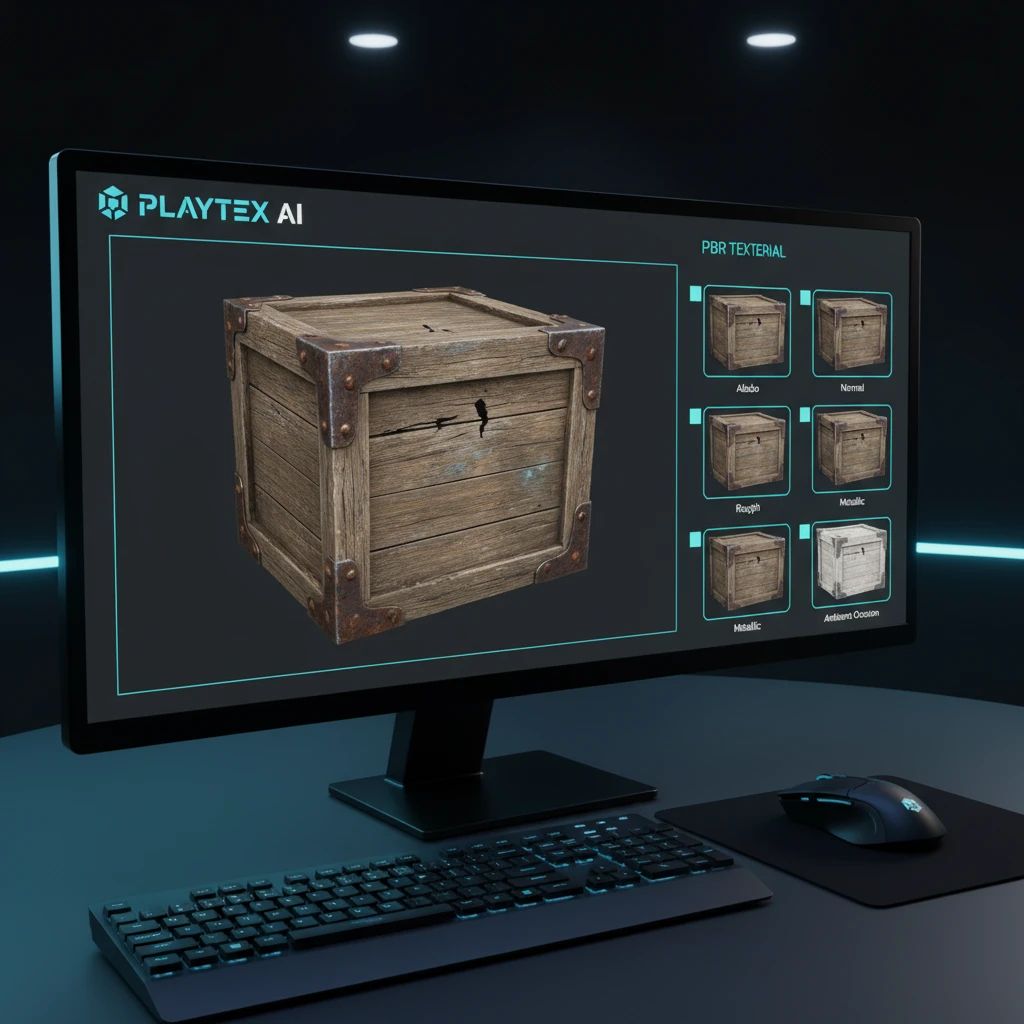
A 3D model rendered in an engine viewport, showcasing the high fidelity and engine-readiness of a material generated using PLAYTEX AI and PBR map tools.
Benefits for Game Developers and Artists: Accelerating Content Pipelines and Team Collaboration
Integrating AI-powered texture generation into your workflow offers significant advantages:
Accelerated Content Pipelines: Dramatically reduce the time spent on texture creation, allowing artists to produce more assets faster.
Enhanced Iteration Speed: Quickly generate and test multiple texture variations, fostering creative exploration without significant time investment.
Consistent Quality: AI helps maintain a high standard of seamlessness and detail across all generated textures.
Focus on Creativity: Offload repetitive tasks to AI, enabling artists to dedicate more time to artistic direction and unique asset creation.
Improved Team Collaboration: With repeatable workflows and engine-ready outputs, teams can collaborate more effectively, ensuring consistency and reducing integration hurdles.
By streamlining the texture pipeline, PLAYTEX empowers teams to meet demanding production schedules while elevating the visual quality of their games.
Conclusion: Streamlining Your Texture Creation with PLAYTEX AI
The era of manual, painstaking texture creation is evolving. AI-powered tools like the PLAYTEX AI Texture Generator offer a robust solution for game developers seeking to create high-quality, seamless textures and complete PBR materials efficiently. From generating initial concepts to producing engine-ready maps and facilitating repeatable workflows, PLAYTEX accelerates your content pipeline and enhances artistic iteration.
Embrace the future of game art production. Explore how PLAYTEX can transform your texture creation process and empower your team to build more immersive and visually stunning worlds.
Explore Related PLAYTEX Tools
These tools connect directly to the workflow covered in this article.