
In game development, visual consistency is paramount. Players expect a cohesive world where materials behave predictably, regardless of lighting conditions or viewing angles. However, achieving this consistency with Physically Based Rendering (PBR) can be a significant challenge. Variations in artist interpretation, software settings, and pipeline stages often lead to materials that look different across assets, scenes, or even different builds of a game.
This is where deterministic PBR becomes indispensable. By establishing a predictable and repeatable process for material creation, deterministic PBR ensures that every texture and material output is consistent, high-quality, and production-ready. This article will explore the principles, benefits, and implementation strategies for adopting deterministic PBR workflows in your game production pipeline.
Understanding Deterministic PBR
Deterministic PBR refers to a set of practices and tools that ensure the output of PBR materials is consistent and predictable every time, given the same input parameters. Unlike traditional, more artistic-driven PBR workflows that might rely heavily on manual adjustments and subjective interpretation, a deterministic approach emphasizes standardization, automation, and verifiable results.
The core idea is to remove variables that introduce inconsistency. This means establishing clear guidelines for texture authoring, using consistent software and settings, and leveraging automated processes to generate and validate PBR maps. The goal is to achieve an identical material appearance whether it's generated today or six months from now, by any artist on the team.
The Challenge of PBR Consistency in Game Development
Without a deterministic approach, PBR consistency can quickly unravel. Multiple artists working on a project may use different tools, apply varying levels of artistic judgment, or interpret material specifications differently. This leads to a fragmented visual style and increased iteration time as assets are constantly tweaked to match. Common challenges include:
- Subjective Interpretation: What one artist considers 'rough' for a metal surface might differ from another's.
- Tool Discrepancies: Different PBR authoring tools (e.g., Substance Painter, Mari, Blender) can have subtle variations in their PBR calculations or default settings.
- Pipeline Variations: Export settings, compression, and engine import processes can introduce unintended changes to PBR maps.
- Scalability Issues: As projects grow, maintaining consistency across hundreds or thousands of assets becomes unmanageable without a robust system.
These inconsistencies not only degrade visual quality but also slow down production, requiring extensive manual review and correction cycles.
Key Principles of Deterministic PBR Workflows
Implementing deterministic PBR relies on several foundational principles designed to eliminate variability and promote predictability:
Standardization of Inputs and Outputs
Define clear specifications for all PBR maps (Albedo, Normal, Roughness, Metallic, AO, Height, etc.). This includes bit depth, color space (e.g., sRGB for Albedo, linear for others), resolution, and naming conventions. Establish a consistent material library with predefined parameters for common material types (e.g., 'polished metal', 'rough concrete').
Automated Generation and Validation
Manual processes are prone to human error. Automate as much of the PBR map generation and processing as possible. This includes using procedural tools, scripting export pipelines, and integrating automated validation checks to ensure maps adhere to specified standards before integration into the game engine.
"Automation isn't just about speed; it's about eliminating the tiny, repetitive inconsistencies that accumulate into major visual problems over time."
Version Control and Asset Management
Treat PBR materials and their source files as critical code. Implement robust version control for all source textures, material graphs, and generation recipes. A centralized asset management system ensures that everyone is working with the latest, approved versions and that changes are tracked and auditable.
Implementing Deterministic PBR in Your Pipeline
Adopting deterministic PBR requires a shift in mindset and tooling. Here's a practical approach:
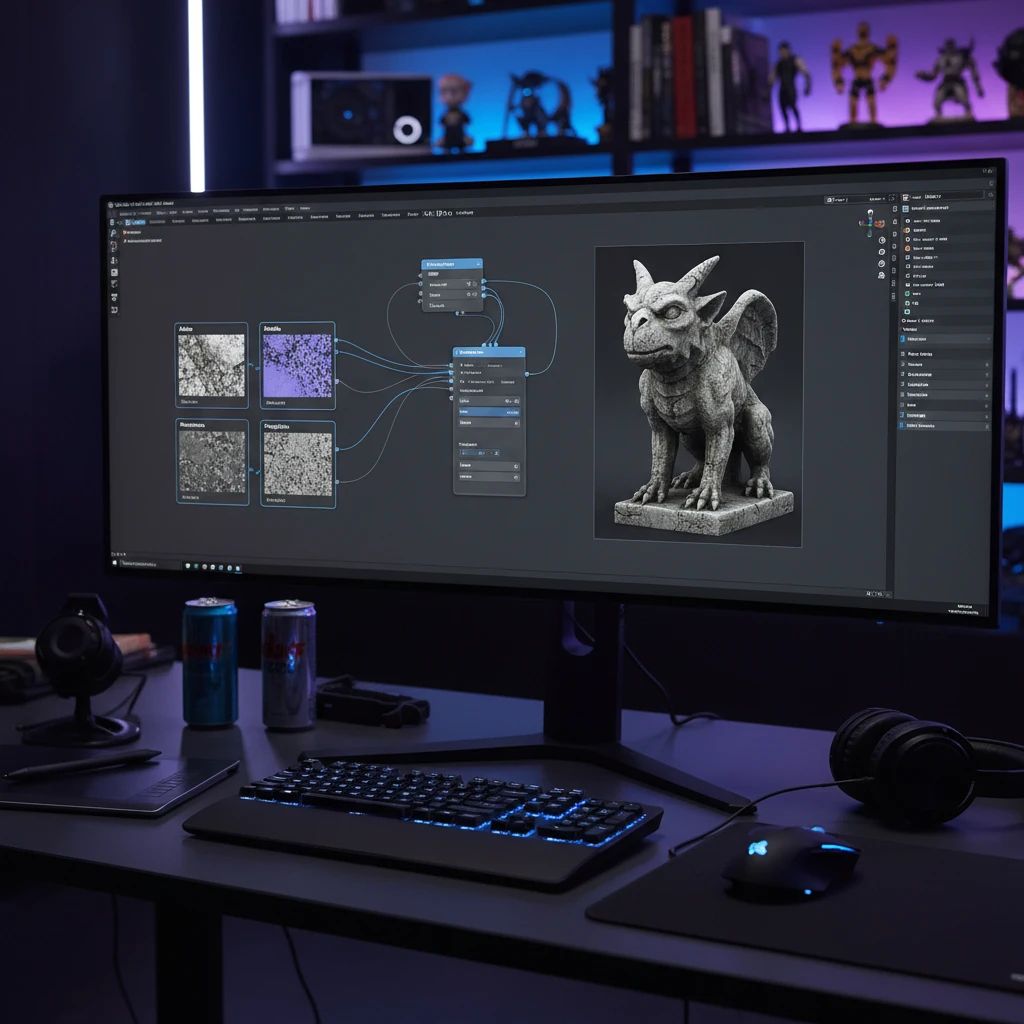
1. Define Material Specifications: Create a comprehensive style guide detailing PBR values, color ranges, and texture requirements for all common material types in your game. For example, specify that all metallic maps should be binary (0 or 1) unless for specific blend cases, and roughness values should fall within a defined range for certain surfaces.
2. Standardize Authoring Tools and Presets: Choose primary PBR authoring software and create custom templates or presets that enforce your defined specifications. This ensures artists start with the correct settings for resolution, channels, and color spaces. PLAYTEX, for instance, provides a platform for deterministic PBR map generation, ensuring consistent outputs from various inputs.
3. Build Automated Pipelines: Develop scripts or use integrated tools to automate the export and processing of PBR maps. This can involve batch processing, format conversion, and even automated checks for common errors like incorrect color space or missing channels. Tools that allow you to define a 'recipe' for material generation and then apply it consistently are key here.
4. Implement Material Validation: Integrate automated checks into your pipeline. This could involve tools that analyze texture data for out-of-range values, incorrect color profiles, or resolution mismatches. Early detection prevents issues from propagating downstream.
5. Establish a Centralized Material Library: Create a shared library of approved, production-ready PBR materials and their associated generation graphs or recipes. This allows artists to quickly access and reuse consistent materials, reducing redundant work and ensuring visual unity.
Benefits for Game Production
The investment in deterministic PBR workflows yields significant returns across the entire game development lifecycle:

- Enhanced Visual Quality: Consistent materials contribute to a more polished, believable, and immersive game world.
- Increased Efficiency: Reduced iteration time, fewer manual corrections, and faster asset integration free up artists to focus on creative tasks.
- Improved Collaboration: A standardized system ensures all team members are on the same page, leading to smoother handoffs and fewer misunderstandings.
- Faster Iteration: Changes to material parameters can be applied globally and consistently, allowing for rapid experimentation and refinement.
- Predictable Performance: Consistent texture formats and resolutions contribute to more predictable memory usage and rendering performance.
PLAYTEX and Deterministic PBR
PLAYTEX is built from the ground up to support and enhance deterministic PBR workflows. Our platform provides tools for generating PBR maps with precise control and repeatability. By defining your material parameters and inputs, PLAYTEX ensures that the outputs are always consistent, adhering to your project's specifications. This removes the guesswork and subjective variations often associated with PBR texture creation, allowing teams to scale their asset production without sacrificing quality or consistency.
Features like our PBR map generator and AI texture generation capabilities are designed to integrate seamlessly into a deterministic pipeline, providing reliable, engine-ready materials that maintain visual fidelity across your entire game.
Best Practices for Maintaining Material Consistency
Beyond initial implementation, ongoing practices are crucial for sustaining deterministic PBR:
- Regular Audits: Periodically review your material library and pipeline to ensure adherence to standards and identify any new sources of inconsistency.
- Continuous Documentation: Keep your material style guide and pipeline documentation up-to-date with any changes or new best practices.
- Training and Onboarding: Ensure all new team members are thoroughly trained on your deterministic PBR workflows and standards.
- Feedback Loops: Encourage artists and technical artists to provide feedback on the pipeline, identifying areas for improvement or further automation.
Conclusion
Deterministic PBR is not just a technical concept; it's a strategic approach that elevates the quality, efficiency, and scalability of game production. By embracing standardization, automation, and robust tooling, game developers can overcome the challenges of PBR consistency, delivering visually cohesive and immersive experiences to players. Investing in a deterministic workflow ensures that your materials are always production-ready, saving time, reducing costs, and ultimately leading to a superior final product.