Seamless textures are the backbone of believable game environments, ensuring that surfaces like stone walls, wooden floors, or intricate fabrics tile perfectly without visible repetition. Historically, creating these textures was a meticulous, time-consuming process requiring significant artistic skill. Today, Artificial Intelligence is transforming this workflow, offering game developers a powerful new way to generate high-quality, production-ready seamless textures with unprecedented speed and consistency.
This guide explores how AI, specifically with tools like the PLAYTEX AI Texture Generator, empowers artists and developers to streamline their texture pipeline, from initial concept to a complete PBR material set ready for any modern game engine.
The Importance of Seamless Textures in Game Development
In game development, seamless textures are fundamental for creating immersive and visually consistent environments. A texture is considered seamless or tileable when its edges match perfectly, allowing it to be repeated across a surface without any noticeable seams or breaks. This property is crucial for:
- Visual Consistency: Maintaining a uniform appearance across large surfaces, preventing jarring visual interruptions.
- Memory Efficiency: Using smaller texture assets that tile, reducing the overall memory footprint compared to unique, large textures.
- Artistic Freedom: Providing artists with a foundation to build upon, allowing them to focus on unique details and variations rather than repetitive tiling work.
Without seamless textures, environments can quickly look artificial, breaking player immersion and increasing development time spent on manual fixes.
The Challenge of Manual Seamless Texture Creation
Traditionally, creating a high-quality seamless texture involved a labor-intensive process. Artists would often:
- Start with a base image, either photographed or hand-painted.
- Manually offset and blend edges to ensure perfect tiling.
- Remove visible patterns or repetitions that would become obvious when tiled.
- Paint out unique features that might stand out unnaturally.
- Iterate extensively to achieve a natural, organic look without obvious seams.
This process demands a keen eye, patience, and often specialized software knowledge, making it a bottleneck in many game development pipelines. Even with advanced tools, achieving truly organic and non-repetitive seamlessness can be difficult.
How AI Transforms Texture Generation Workflows
Artificial Intelligence has emerged as a game-changer for texture creation. AI-powered generators can analyze vast datasets of textures and learn to create new, unique, and most importantly, seamless patterns. These tools automate much of the tedious manual work, allowing artists to:
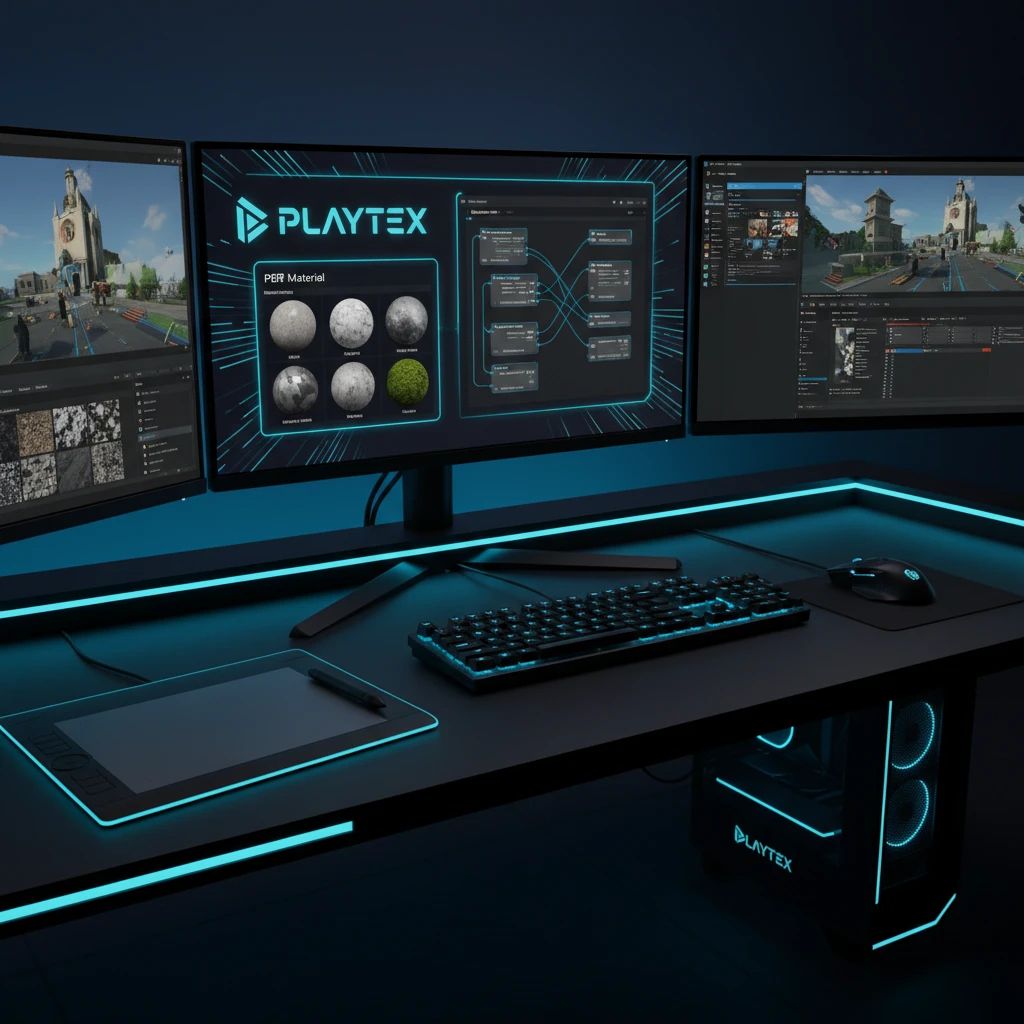
- Generate Concepts Rapidly: Quickly prototype different texture styles and variations from simple text prompts or reference images.
- Ensure Seamlessness Automatically: Produce tileable outputs by design, eliminating the need for manual edge blending.
- Accelerate Iteration: Experiment with numerous options in minutes, significantly speeding up the look development phase.
- Focus on Art Direction: Shift focus from technical tiling challenges to creative decisions and overall visual quality.
This shift empowers smaller teams and individual developers to achieve a level of asset quality previously only accessible to larger studios with extensive resources.
Introducing the PLAYTEX AI Texture Generator for Seamless Concepts
PLAYTEX offers an AI Texture Generator specifically engineered to produce seamless texture concepts for production-ready material workflows. It's designed with game developers in mind, focusing on outputs that are not just visually appealing but also technically sound for real-time engines.
The PLAYTEX AI Texture Generator allows you to:
- Input Text Prompts: Describe the texture you envision, such as "mossy cobblestone path," "rough bark texture," or "sci-fi metal plating."
- Generate from Image: Use the Image to Texture Generator to convert a reference photo into a tileable texture.
- Ensure Tileability: The AI is trained to generate textures that inherently tile, saving significant time in post-processing.
- Produce Base Textures: Create the foundational diffuse or albedo map that will then be used to generate a full PBR material set.
This tool is a crucial first step in accelerating your asset creation pipeline, providing a consistent and high-quality starting point for any material.
Step-by-Step: Generating Seamless Textures with PLAYTEX AI
The process of creating a seamless texture using the PLAYTEX AI Texture Generator is designed to be intuitive and efficient:
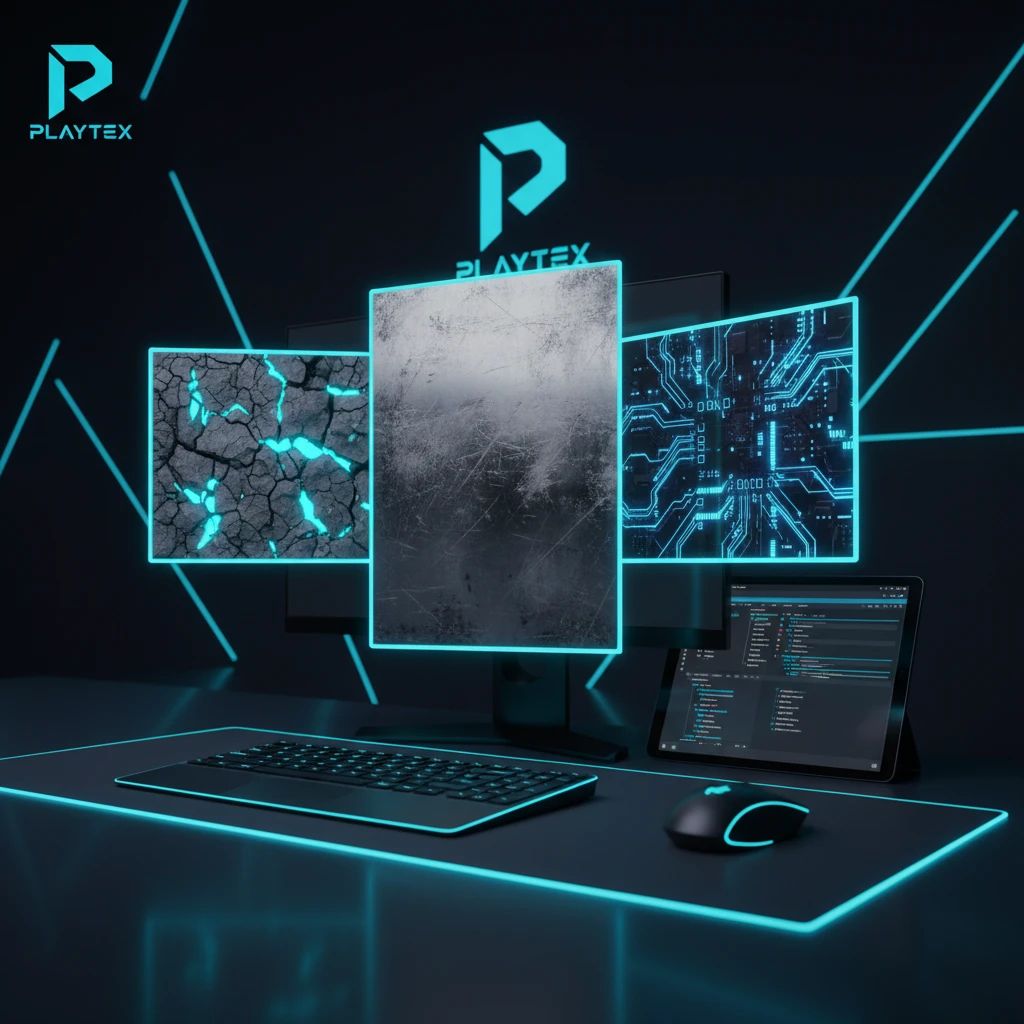
- Define Your Concept: Start by clearly articulating the type of texture you need. Consider the material, its properties (roughness, shininess), and its context within your game environment.
- Input Your Prompt or Image:
- Text Prompt: Enter descriptive keywords into the AI Texture Generator. Be specific about details like color, pattern, and surface characteristics. For example, "dark volcanic rock, sharp edges, subtle moss."
- Image Input: If you have a reference photo, upload it to the Image to Texture Generator. This tool will process your image to create a tileable base texture, which can then be further refined or used as a starting point for AI generation.
- Generate and Iterate: Initiate the generation process. The AI will produce several seamless texture variations based on your input. Review the results and iterate by adjusting prompts or parameters until you achieve the desired aesthetic.
- Refine (Optional): If minor adjustments are needed, the PLAYTEX Image Editor can be used to clean up images, remove distractions, or make subtle color and detail tweaks before proceeding to PBR map generation.
This iterative process allows for rapid prototyping and ensures the final base texture meets your artistic vision.
Refining and Integrating: From AI Texture to Production-Ready PBR Material
Generating a seamless base texture is just the beginning. For modern game engines, you need a full set of Physically Based Rendering (PBR) maps to define how light interacts with your material. This is where the PLAYTEX workflow truly shines.
Once you have your seamless base texture from the AI Texture Generator, you can seamlessly transition it into the PBR Map Generator. This tool automatically creates the essential maps required for realistic rendering:
- Normal Map: Adds surface detail and depth without increasing polygon count.
- Roughness Map: Controls the micro-surface detail, influencing how light scatters and reflects.
- Metallic Map: Defines which parts of the surface are metallic and which are dielectric.
- Ambient Occlusion (AO) Map: Simulates soft shadows where objects are occluded, adding depth.
- Height Map: Provides displacement information, useful for parallax occlusion mapping or tessellation.
- Emission Map: Specifies areas that emit light.
The deterministic nature of the PLAYTEX PBR Map Generator ensures consistent and accurate map generation, critical for maintaining visual quality across your game's assets.
Leveraging PLAYTEX PBR Map Generator for Comprehensive Material Sets
The PBR Map Generator in PLAYTEX is designed to take your seamless albedo/diffuse texture and intelligently derive all necessary PBR maps. It's not just about generating maps; it's about generating coherent map sets that work together to create a believable material.
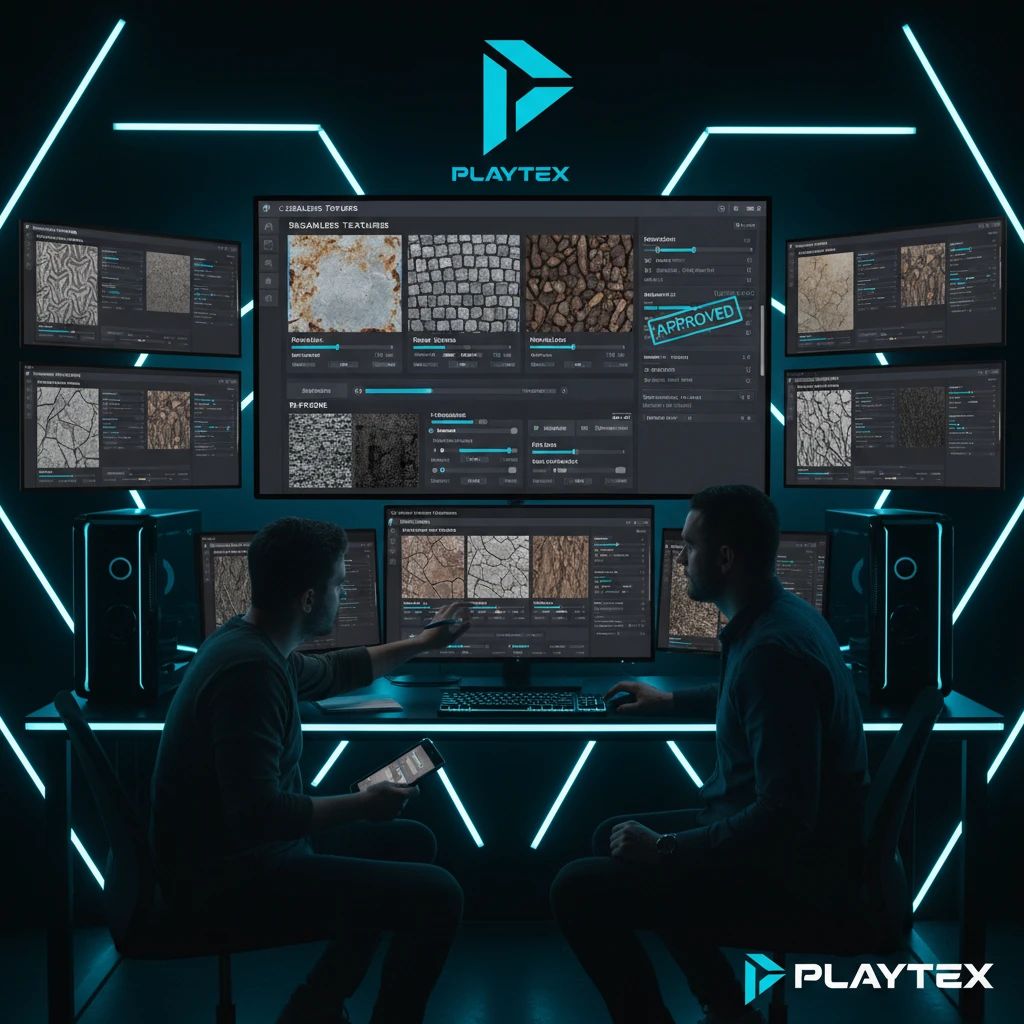
Modern game development relies heavily on PBR workflows, which are standardized across engines and content creation tools. Adhering to these standards, often informed by specifications like Khronos glTF, ensures your assets are interoperable and render consistently. PLAYTEX's PBR Map Generator is built to meet these industry expectations, providing outputs that are directly usable in engines like Unity, Unreal Engine, and others.
This integrated approach means you avoid the complexities of generating each map separately in different tools, ensuring consistency and saving valuable development time.
Benefits for Game Developers: Speed, Quality, and Consistency
Integrating AI texture generation into your workflow with PLAYTEX offers significant advantages for game developers, environment artists, and studios:
- Accelerated Content Pipeline: Drastically reduce the time spent on texture creation and iteration, freeing up artists to focus on higher-level creative tasks.
- Production-Ready Outputs: Generate seamless textures and complete PBR material sets that meet the technical demands of modern game engines.
- Enhanced Visual Quality: Achieve realistic and visually consistent environments with high-quality, tileable textures and accurate PBR maps.
- Workflow Consistency: Maintain a standardized process for material creation across your team, ensuring all assets adhere to the same quality benchmarks.
- Cost-Effectiveness: Reduce reliance on expensive stock texture libraries or extensive manual labor, optimizing resource allocation.
By automating the most repetitive aspects of texture creation, PLAYTEX empowers teams to achieve more with less, without compromising on quality.
Conclusion: Streamlining Your Game Asset Pipeline with AI
The era of manual, labor-intensive seamless texture creation is evolving. AI-powered tools like the PLAYTEX AI Texture Generator offer a robust, efficient, and creative solution for game developers seeking to build immersive worlds faster. By combining seamless AI texture generation with deterministic PBR map creation, PLAYTEX provides a comprehensive platform to transform your texture workflow from concept to engine-ready material.
Ready to accelerate your game development pipeline? Explore the PLAYTEX AI Texture Generator and experience how intelligent tools can elevate your material creation process.