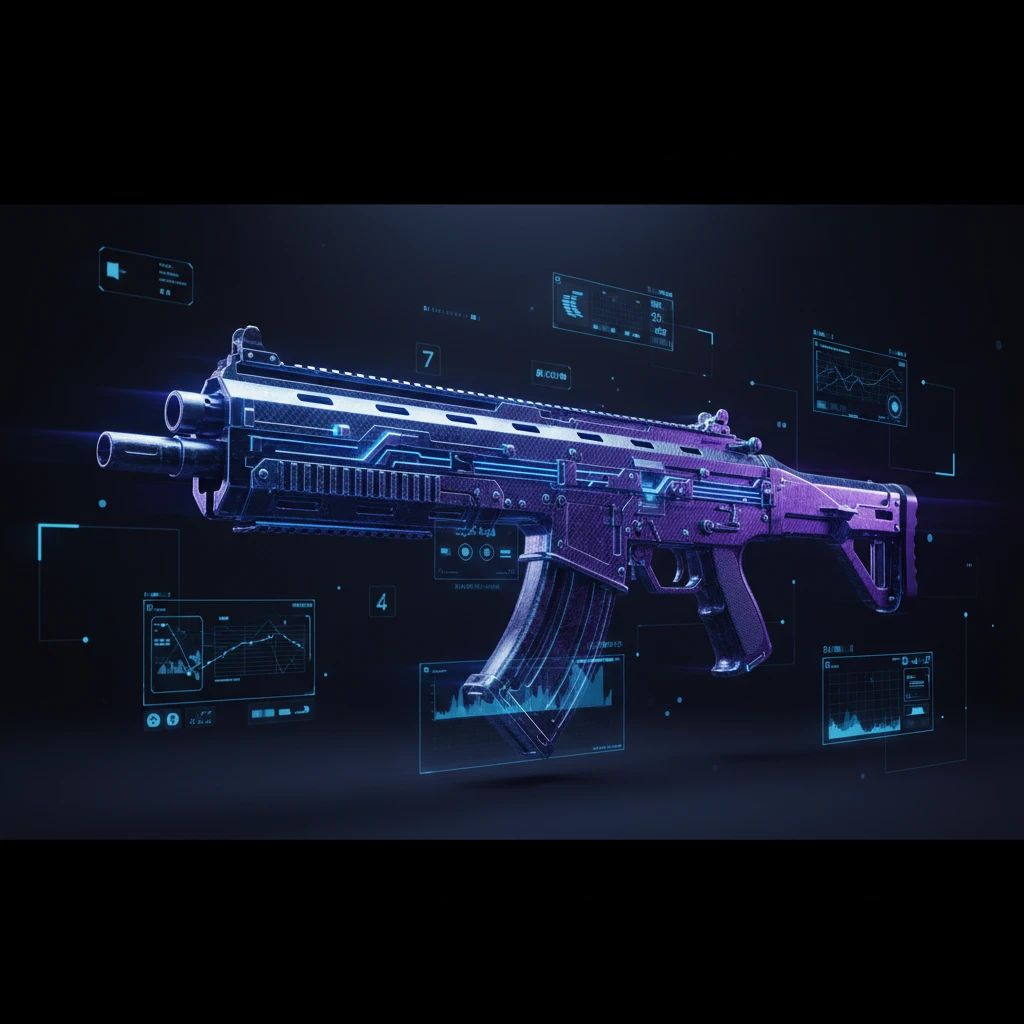
Normal mapping is a cornerstone technique in modern game development, enabling artists to add intricate surface detail to low-polygon models without increasing their geometric complexity. This illusion of depth and texture is crucial for achieving realistic visuals while maintaining optimal performance.
However, traditional normal mapping workflows can be time-consuming and iterative. This article will explore accelerated production workflows designed to empower game developers, environment artists, and technical artists to create high-quality, production-ready normal maps more efficiently, ensuring your assets look their best without bogging down your pipeline.
Understanding Normal Maps: The Foundation
At its core, a normal map is a texture that stores directional information (normals) for each pixel, rather than color. These normals tell the game engine how light should interact with the surface, simulating bumps, grooves, and other fine details. Instead of physically modeling every wrinkle on a rock or every seam on a character's clothing, a normal map can achieve the same visual effect.
Normal maps are an indispensable part of Physically Based Rendering (PBR) pipelines. They work in conjunction with other maps like Albedo, Roughness, and Metallic to define how light reflects off a surface, contributing significantly to the realism and immersion of game environments and characters.
Traditional vs. Accelerated Workflows: A Comparison
Historically, normal map creation often involved sculpting high-detail meshes in software like ZBrush or Blender, then baking that detail onto a low-polygon game mesh. This method is robust but can be slow, requiring significant manual effort and iteration.
Accelerated workflows, by contrast, leverage automation, procedural generation, and AI to reduce manual labor and speed up the process. These modern approaches focus on generating high-quality normal maps rapidly, allowing for quicker iterations and more efficient asset production, which is critical for meeting tight deadlines in game development.
High-Poly to Low-Poly Baking: Optimizing Detail
Even with accelerated methods, high-poly to low-poly baking remains a fundamental technique for capturing sculpted detail. The process involves projecting the surface normals from a detailed source mesh onto a simplified target mesh. Key to successful baking is proper cage setup, which defines the projection boundaries, and careful attention to tangent space consistency.
Tools like Marmoset Toolbag, Blender, and Substance Painter offer robust baking solutions. Ensuring your low-poly mesh has sufficient UV space and avoiding overlapping UVs are crucial steps to prevent artifacts. Understanding how to adjust projection distances and anti-aliasing settings can significantly improve the quality of your baked normal maps.
Leveraging AI and Procedural Generation for Normal Maps
The advent of AI and advanced procedural tools has revolutionized normal map creation. AI-powered solutions can generate convincing normal maps from a single diffuse texture or even a photograph, dramatically cutting down on manual sculpting time. This is particularly useful for environment artists needing to quickly generate a variety of surface details.

Procedural generation, often seen in tools like Substance Designer, allows artists to define rules and parameters to create complex, tileable normal maps algorithmically. This ensures consistency, offers infinite variations, and makes it easy to iterate on designs. Platforms like PLAYTEX integrate AI texture generation and image-to-texture workflows, enabling creators to transform simple inputs into production-ready normal maps with minimal effort.
Iterative Design and Real-time Feedback
Fast iteration is vital in game development. Modern normal mapping workflows emphasize real-time feedback, allowing artists to see changes instantly within their chosen 3D application or game engine. This eliminates the need for lengthy export-import cycles, enabling quicker adjustments to normal map intensity, blending, and detail.
Many tools now offer direct integration with game engines or provide high-fidelity viewport previews that accurately represent how the normal map will look in-game. This immediate visual feedback helps artists fine-tune details, resolve issues like seams or stretching, and ensure the normal map perfectly complements the other PBR textures.
Engine Integration and Performance Considerations
Once created, normal maps must be correctly integrated into your game engine (e.g., Unity, Unreal Engine). Ensuring consistent tangent space (e.g., MikkTSpace) between your authoring tool and the engine is paramount to prevent lighting artifacts. Most modern engines handle this automatically, but it's a common troubleshooting point.
Performance optimization is also key. Normal maps should be compressed efficiently (e.g., BC5 for DirectX, ETC2 for mobile) and have appropriate mipmap settings to manage memory and render quality at different distances. Utilizing detail normal maps for close-up views can add extra fidelity without requiring higher base texture resolutions, further optimizing performance. For a comprehensive approach to material creation, consider exploring PBR map generators that ensure all your textures are engine-ready.
Best Practices for Production-Ready Normal Maps
- Consistent Tangent Space: Always ensure your normal map generation and engine settings use the same tangent space calculation.
- Avoid Seams and Artifacts: Pay close attention to UV unwrapping and baking settings to prevent visible seams or projection errors.
- Appropriate Resolution: Use resolutions that match the asset's importance and viewing distance. Don't overdo it for distant objects.
- Detail Normal Maps: Layer smaller, tiling normal maps on top of primary normal maps for added micro-detail, especially on large surfaces.
- Team Collaboration: Utilize platforms that support asset binding and collaborative workflows to maintain consistency across a team.
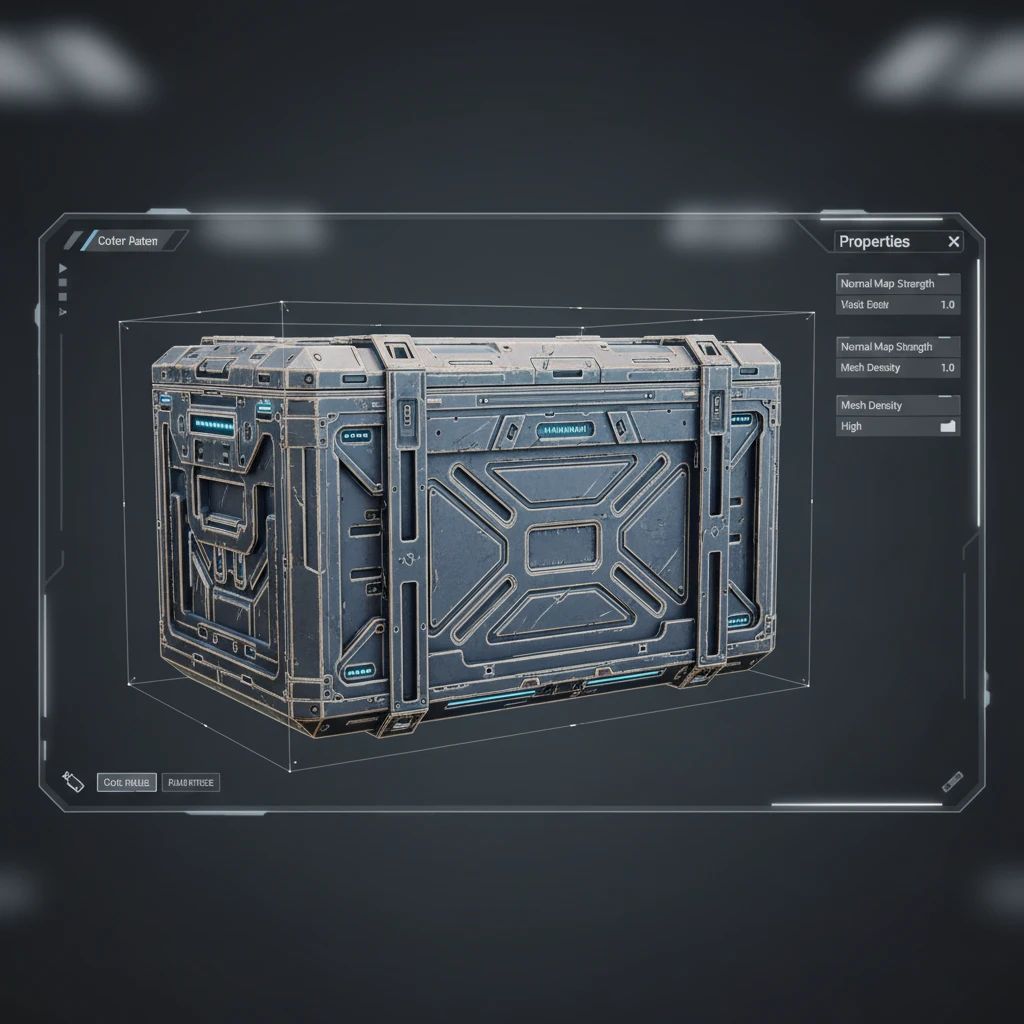
Conclusion: Streamlining Your Asset Pipeline
Accelerated normal mapping workflows are no longer a luxury but a necessity for game developers aiming for both visual excellence and production efficiency. By embracing modern tools, AI-driven generation, and procedural techniques, artists can significantly reduce the time spent on creating intricate surface details.
The focus shifts from laborious manual sculpting to intelligent asset creation, allowing teams to iterate faster, maintain higher quality standards, and ultimately ship more polished games. Integrating platforms like PLAYTEX into your pipeline can provide the tools needed to generate high-quality, engine-ready normal maps with unprecedented speed and consistency, empowering your team to build immersive worlds faster than ever before.